Workers Who Became Beloved
What you'll find in this article
- How the relationship between wolves and humans laid the foundation for the most extraordinary working partnership in history
- The First World War moment that changed everything — and the doctor whose German Shepherd started it all
- The remarkable jobs dogs do today, from police and military work to search and rescue, herding, and therapy
- Why the Border Collie on a Welsh hillside today is doing almost exactly what its ancestors did 9,000 years ago
- The science behind the nose — and why 300 million olfactory receptors are only part of the story
- The dogs that grieve when they find only the dead, and what that tells us about the bond between our two species
- Why Bumper, Jodie, Jude, Florin and Lexi are Guinness World Record holders — and why their achievement may one day save your life
Bumper, Jodie, Jude, Florin and Lexi are 5 Labradors. They are also Guinness world record holders. Not in how many balls they can retrieve in 3 minutes or how quickly they can navigate an agility course but how accurately they can identify specific diseases. They are medical detection dogs and work by day in a lab learning how to use their 300 million scent receptors in their noses to identify diseases in samples of urine, saliva and even breath.
Humans and dogs have been working together for over 14,000 years, the change is how we work together.
Before dogs it was wolves. A mutually beneficial partnership between wolves and humans developed through hunting prey; the wolves would chase and corner and the humans would step in for the final kill. The resulting reward of food was shared.
This wasn’t domestication but a halfway house where tamed wolves, then wolf-dogs, then eventually dogs would travel together in a nomadic lifestyle with humans; hunting together, sharing warmth by campfires, the animals providing protection and the humans providing convenience and as settlements took place, a home, leading to a domestic bonding between species that we can start to recognise today.This unspoken arrangement also reduced the number of predators each one had…by one each.
Burial sites have uncovered the canine-human relationship across diverse cultures and continents going back tens of thousands of years, where often both people and dogs have been buried together. Whether this proves domestic bonding beyond a working partnership or just an indicator of the significance of the relationship is unknown.
By 9000 BC dogs were an integral part of everyday life all over the world, herding and guarding livestock, protecting city walls, transporting people and cargo across frozen terrains.
Dogs weren’t pets that happened to be useful, they were workers who became beloved.
But the relationship has not always been one of equals. The same loyalty and compliance that makes dogs such extraordinary partners has, at times, been exploited rather than honoured. Dogs have been used in medical and cosmetic testing laboratories — not as willing participants but as subjects, with no choice in the matter. Working dogs have been discarded when their usefulness expired. The bond that dogs offer unconditionally has not always been returned in kind. It is worth acknowledging, in any honest account of what dogs have given us, that we have not always deserved it.
The evolution of our relationship with dogs has been a constant one — a story still being written, in laboratories and living rooms, on mountainsides and in care homes, every single day.
Although The Kennel Club wasn’t established until 1873, the concept of selective breeding goes back 1,000’s of years for developing herding and hunting skills, but it was during the 19th century industrialisation the breeding became seriously refined for specific tasks and from a register of dog shows and trial events the kennel club evolved into an official dog breed standard authority.
But our modern day working relationship with dogs truly shifted during the First World War in 1916 with the establishment of formal training for guide dogs by Dr Gerhard Stalling to provide assistance to soldiers who had been permanently blinded by poisonous gas during the war. He noticed the natural instincts of his German Shepherd when leaving him with a blind patient; on his return he observed the dog's guiding and protective behaviour towards the soldier.
Dr Stalling opened a guide dog school in Oldenburg and within a decade was training over 600 dogs a year.
His approach was swiftly adopted in the US by American philanthropist Dorothy Eustis, whose work in Switzerland first demonstrated what a formally trained guide dog could do. The idea crossed the Atlantic and then into the UK, leading to the creation of The Guide Dogs for the Blind Association in 1934 by Muriel Crooke and Rosamund Bond. Today the Association breeds about 1,500 puppies a year with the cost of training at £38,000 for each dog over a 20 month period (overall lifetime cost nearing £80,000), where only about half the dogs trained qualify to become active guide dogs for the blind. It is funded purely by charitable donation with no government funding. There are over 5,000 active guide dogs in the UK and even with these numbers there is still a 12-18 month waiting list for a partnership to be fulfilled.
As it was 14,000 years ago, the relationship between guide dog and owner is a partnership, built on trust, teamwork and mutual respect. Guide dogs don’t have built in sat nav so an owner needs to know the destination and the route, and they can’t read road signs or traffic lights but they can navigate obstacles and warn of inclines, steps and stairs for an owner to then investigate and identify. Most remarkably guide dogs are trained to disobey an owner’s instruction if it is a dangerous one.
However altruistic a guide dog is, they are not robots and still need praise and rewards for being so excellent at their job, with a very human trait, they cannot be taken for granted and quite right too! An owner has all the normal responsibilities of caring for their assistance partner in the same way as any pet companion.
By the time they are partnered with a suitable owner they have spent 2 years of hard graft learning and training to gain the skill set needed that will give a visually impaired person the freedom they wouldn’t have otherwise.
Guide Dogs for the visually impaired is possibly the first job people may think of when considering the most common in the canine employment pool but there are many in the family of jobs for dogs.
Police and Military dogs
As with the Labrador’s common association as the typical guide dog, it is the German Shepherd that most of us picture as the iconic police or military dog. A loyal and brave breed with almost the perfect mix of intelligence, strength and agility which is perfectly matched for patrolling and protection.
Because of their slightly smaller size and fast reactions, the Belgian Malinois has also become a favourite in modern military operations where they are more easily deployed in parachute operations.
Whereas the Belgian Malinois and German Shepherd are ideal in operational duties where their intimidating physical features can be as useful as their intelligence and athleticism, it is the less obvious, more ‘family friendly’ breeds such as Beagles, spaniels and again the Labrador that are more likely deployed in civilian settings such as airports where they are popularly used as sniffer dogs, seeking out contraband such as drugs, firearms and illegal foodstuffs. Certain breeds often specialise in specific categories.
Scamp, a springer spaniel and recipient of the PDSA Order of Merit and Institute Hero Award at the Chartered Trading Standards Institute (CTSI) Hero awards, was so proficient at detecting illegal tobacco, vapes and bank notes that a £25,000 bounty was put on his head by organised crime groups. Scamp was the leading force in discovering over £6 million worth of contraband, putting severe disruption in the criminal enterprise and a significant dent in the earnings.
An incredible nose at work.
But not, it must be said, the best! This accolade belongs to the Bloodhound who is regarded as having the very best in scent ability, so good is its sniffability that the blood hound can follow a scent for up to 130 miles and is so scientifically reliable that a Bloodhound's findings are admissible in court.
Search and Rescue
The mid 1980’s brought the image of the St Bernard as the perfect search and rescue dog into our living rooms through adverts on TV. Typically for the 80’s these were promotions for alcohol and tobacco, in both cases an alpine setting, St Bernard coming to the rescue with the delivery of beer and St Bernard tobacco in the iconic miniature brandy barrels hanging from their collar.
A fun twist on the origins of the first rescue dog who in the 1600’s was trained by the Monks of the Great St Bernard Hospice in the Swiss Alps who would search out lost travellers before licking them and lying on them to give them warmth.
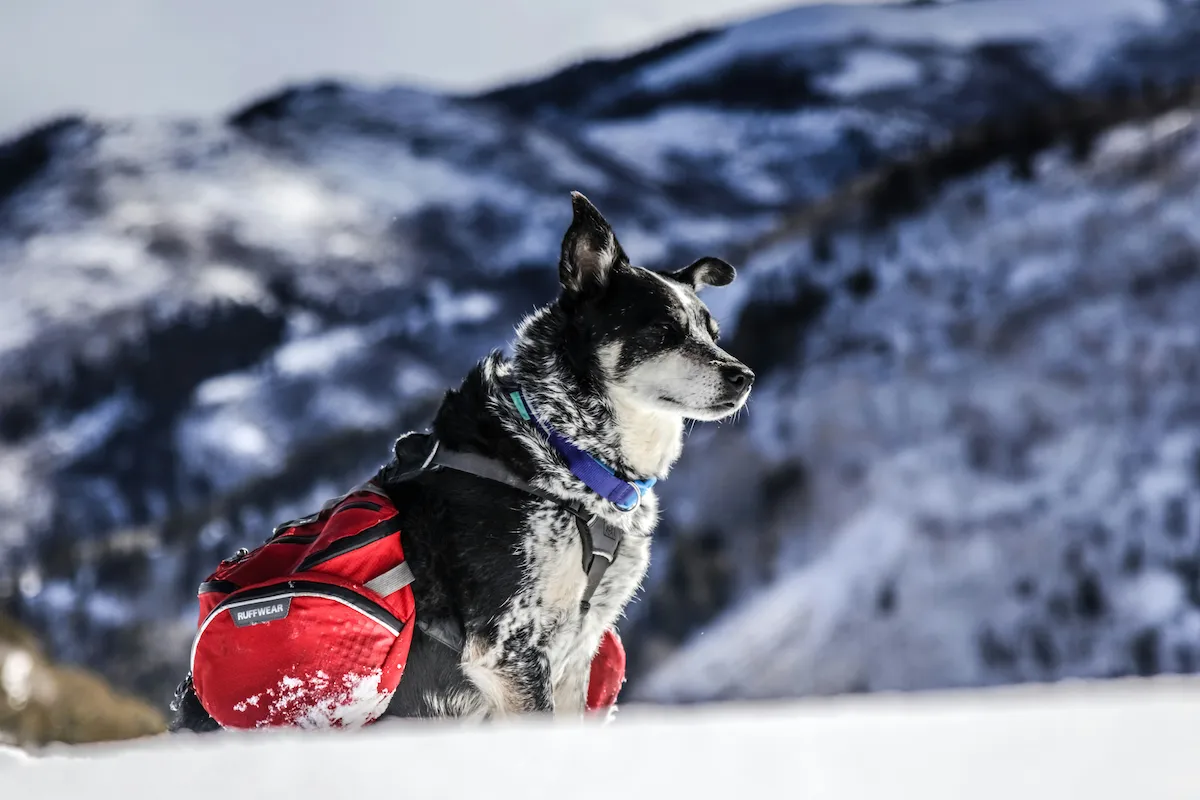
Today the St Bernard is used less frequently due to their size and the demands of modern terrain, with Labradors, Border Collies and German Shepherds now the breeds of choice for mountain rescue and disaster relief teams worldwide.
A search and rescue dog can detect human scent from a quarter of a mile away, through rubble, through snow, through floodwater. Where it would take a team of twenty human searchers hours to cover a given area, a single trained dog can do it in minutes.
After the September 11th attacks in New York in 2001, over 300 search and rescue dogs were deployed at Ground Zero. They worked in shifts alongside their handlers in conditions that were physically and psychologically brutal. Many of those dogs began to show signs of stress and low morale, not from the danger, but from finding only the dead. These dogs are trained to find survivors. Finding none, day after day, affected them deeply.
Their handlers responded in the most human way imaginable. They began staging false finds, asking colleagues to hide in the rubble so the dogs could locate a living person, feel the reward of a successful rescue, and return to work with their spirit restored.
It is hard to think of a more powerful illustration of the mutual nature of this partnership. We were, in the most desperate of circumstances, taking care of them.
Herding dogs
Herding livestock is one of the oldest jobs that dogs have excelled in for thousands of years and it is still the most efficient and, where many ancient farming skills have become motorised and automated, environmentally friendly way for farmers to move their herds about. The Border Collie is the champion of herding and perhaps the most remarkable living link to the ancient working dog, performing on a Welsh hillside today almost exactly the same role its ancestors performed 9,000 years ago. Some jobs, it turns out, were perfected first time.
Therapy and dementia dogs
Therapy dogs are an invaluable aspect in recovery and care and although are usually less intensely trained than dogs in other more specific professions, do need to have specific traits of calmness and a friendly nature. They make a difference to the lives of people that need them.
As my own father slipped gradually into the fog and increasing confusion that Alzheimer's inflicts on so many, it was Boots the border terrier, who would rarely leave his side, somehow transferring a calmness by proximity and brought out the cheeky behaviour in Dad that made us sure he was, indeed, still Dad. At the dinner table he would carefully halve whatever was on his plate, convinced nobody noticed as he slipped it quietly to Boots underneath, the most transparent secret in the house, and the most precious.
Early research from the University of Groningen suggests that a trained neuro service dog has a measurably greater impact on the lives of both dementia sufferers and their carers than a companion dog alone — increasing access to public spaces, improving socialisation and providing a sense of direction and purpose that a pet dog, however beloved, cannot quite replicate in the same way.
The Dementia Dog Project, a UK partnership between Alzheimer Scotland and Dogs For Good, specifically trains dogs to assist people with dementia and their carers at home offering an invaluable service in an area that is relatively unreported but is ever more relevant today as the overall number of dementia cases rises .
The Nose — And Something More
The science is in the nose!
With 300 million olfactory receptors (humans have 5 million) and the dedicated scent processing part of the brain being 40 times larger than ours, it is little wonder that dogs are considerably better than we could ever be at these jobs. It allows them to identify scents, sometimes over great distances, buried in rubble or masked purposely by other substances.
This remarkable biology is what allows dogs to be able to detect disease and medical conditions often before a person is even aware that they are ill. When unwell, our immune system produces Volatile Organic Compounds that are present in our urine, breath and sweat and although these VOC’s can be measured, scientists are still unsure how exactly dogs detect disease. It is certain that they do, that they are always reading us and monitoring us, physically and emotionally.
For over 14,000 years of shared evolution, dogs have developed something that goes beyond an extraordinary nose. They have developed an attunement to humans that science is only beginning to properly understand. Research published in the journal Science found that when dogs and humans make gentle eye contact, both experience a surge in oxytocin, the hormone associated with love, bonding and trust. Dogs are sensitive to human voices, they read our facial expressions and mirror our emotional state. When we are anxious, they are alert and when we are calm, they settle and this is why a therapy dog stays close without being asked and a dementia dog seems to understand when something has changed. It is why a search and rescue dog, trained to find the living, is distressed when it cannot.
The nose detects. But something else, something that emerged from campfires and shared hunts and burial grounds and fourteen millennia of sharing lives, cares about what it finds.
Perhaps we don’t need to discover why this happens. Maybe 14,000 years of living together, is explanation enough.
The Frontier
As Bumper, Jodie, Jude, Florin and Lexi bask in the glory of their Guinness world record, the scale of their achievement is unknown to them. Apart from the treats, cuddles and praise they were rewarded with when they detected ‘the most diseases ever detected by a group of dogs’, they went about their work with the diligence and accuracy of any human medical researcher. They don’t know they are breaking through barriers, making medical history, they are doing their best work in what they are so naturally gifted to do .
These dogs, along with 13 other dogs of 11 different breeds, work in cancer and bio detection at Medical Detection Dogs in Buckinghamshire, a charity that was founded in 2008. The results are extraordinary. In trials, trained dogs have detected bowel cancer, breast cancer, prostate cancer, Parkinson's disease and bacterial infections. During the COVID-19 pandemic, Medical Detection Dogs demonstrated in controlled trials, using collected samples rather than sniffing people directly, that trained dogs could screen for the virus with 94-96% accuracy in five to ten seconds. In practice this level of detection raises the possibility of dogs working in airport terminals, for example, potentially able to identify current and future diseases in infected travellers before they know it themselves.
The charity has also trained over 150 Medical Alert Assistance Dogs, partnered with owners who suffer from chronic medical conditions that have frequent acute or sudden episodes such as PoTS and other cardiac arrythmia’s, Addison’s disease, MCAS (Mast Cell Activation Syndrome), Non-epileptic seizures, low blood glucose levels and severe allergies. These types of conditions have little or no signs of warning before an episode that the Medical alert dogs are able to sense before happening potentially helping to reduce the severity of an attack or episode.
Co-founder Dr Claire Guest was herself unwittingly alerted to her own health issues when her Labrador Daisy detected something not quite right, spurring Dr Guest to seek medical attention which was subsequently diagnosed as an early stage tumour.
The dogs don’t perhaps know how much their work as medical researchers is contributing towards innovations in health diagnosis and management because they are simply doing what dogs have always done. They are reading us. They are paying attention. They are taking care of us.
As they have, without interruption, for fourteen thousand years.
Medical Detection Dogs run monthly Super Sniffers Live events at their centre just outside Milton Keynes — watch bio-detection dogs at work in real time. medicaldetectiondogs.org.uk