Why Indoor Cats Need More Stimulation Than You Think
WHAT YOU'LL FIND IN THIS ARTICLE
- Why the sofa and a food bowl isn't quite enough for an indoor cat
- The signs your cat might be telling you they're bored — and how easy it is to miss them
- Simple things that make a real difference without turning your home into a cat adventure park
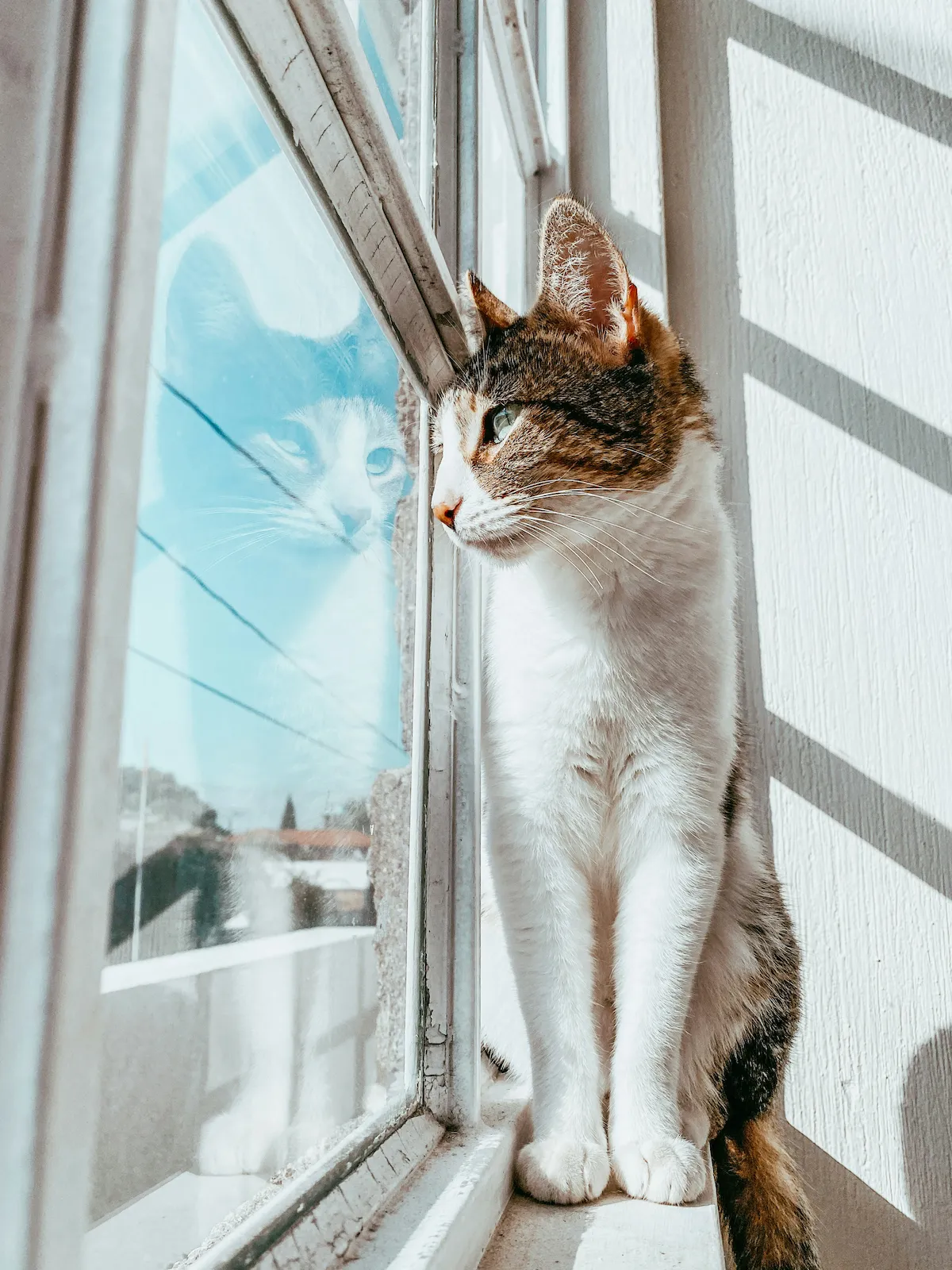
Looking out of the window, bathed in sunlight on the window sill, the cat seems as content as could be; warm and sleepy, watching the outside world pass by without a care in the world. She appears to need very little, sleeping most of the day and when she wants to eat, she eats. She needs the toilet? There’s 24/7 access to a litter tray in the corner. A drink? No problem, there’s fresh water ‘on tap’ (well in the drinking bowl). Many cats live indoors exclusively and on the surface it can appear that they are absolutely delighted to live blissfully ‘Garfield style’, pretty much needing nothing more than the basics and a good cuddle when you get back from work.
There is perhaps a little more to consider though.
Stimulation. It's the main differentiator between outdoor and indoor cat life. The outdoor cat inhabits a world of relentless sensory stimulation where every garden visit brings new smells to investigate, movements to track, surfaces to scratch and trees, fences and walls to scale. The hunt may come to nothing, but the stalking, the watching, the coiling readiness of it, is what satisfies. An outdoor cat is never really off duty. She is always, at some level, a small predator doing what small predators do.
Choosing to raise your cat as an indoor companion protects them from the dangers of roads, of other animals and disease, the chaos of an unpredictable world. But it doesn't switch off the instincts that evolved to navigate it. Behind the sleepy window sill contentment, there is a creature wired for curiosity and movement. She needs something to feed it.
And it isn’t rocket science to evaluate if your cat is getting enough. Zoomies at 3am because of pent up energy, over eating and putting on weight (something Garfield would definitely defend as quite normal for a cat!). Scratching furniture excessively is her way to redirect her hunting instinct rather than being an indication of bad temperament. She might become a bit aggressive or groom herself excessively but these are often signs of frustration rather than ingrained quirks of personality. The urge to attribute these unsociable or slightly obsessive behaviours to your cat's individual personality is understandable but have a quick look around and see what could be different around her, not inside her.
Providing something a little bit more doesn’t take significant investment of time or money. Small changes to your cat's environment and routine make a huge difference.
Cats are natural climbers who feel most secure observing the world from height. A cat tree, a cleared shelf, a window perch; vertical space is often more valuable to a cat than floor space, something worth remembering particularly in smaller homes and flats. Position one near a window with a view of a garden or bird feeder and you've essentially installed free entertainment. It is, for a cat, something close to live television.
Toys matter too, but perhaps not in the way most owners think. Leaving the same toys on the floor permanently means they effectively become furniture, noticed by nobody, including the cat. Rotating a small selection weekly makes old toys feel new again. Cats habituate to familiar objects quickly and variety, not quantity, is what keeps them engaged. A wand toy or feather teaser that mimics the movement of prey, used in a focused ten to fifteen minute play session each day, will do more for a bored indoor cat than a basket full of mice she stopped noticing three weeks ago.
Puzzle feeders are worth considering too. Making a cat work slightly for her food, problem solving her way to the reward, satisfies the hunting instinct in a way that a bowl on the kitchen floor simply doesn't. They're widely available, inexpensive, and have the added benefit of slowing down the cats who treat mealtimes as a competitive eating event.
One area that tends to get overlooked entirely is scent. Cats experience the world heavily through smell and new scents engage them in ways owners don't always anticipate. Safe herbs like catnip or silvervine, a new paper bag left on the floor, or simply rotating their bedding occasionally, these are tiny gestures that register as genuinely interesting to a cat whose environment rarely changes.
And perhaps the simplest thing of all: your attention. Not passive companionship — not just being in the same room — but active, focused interaction. Ten or fifteen minutes of genuine play each day, where she is the hunter and you are providing something worth hunting, is the closest an indoor cat gets to the real thing. It costs nothing and it matters more than most owners realise.
There will be some weeks when even the most played with cat will not quite get enough, perhaps when you’ve had a busy week, with later days at the office or more nights out with friends but in much the same way as a few rainy days when the other side of the cat flap for an outside venturing moggy has not been very inviting.
Sometimes it won't be enough but that's okay because the overall deal is still a good one.
The indoor cat has it good. Safety, warmth, evenings on the sofa and continuous reality TV, all the trappings of modern living but the deal works best when their environment also gives their instincts somewhere to go too.
The predator inside is still there and needs a job to do.