Why Does My Dog Dig? The Ancient Instinct Behind the Ruined Lawn
WHAT YOU'LL FIND IN THIS ARTICLE
- Why dogs dig — and why it's not naughtiness
- The different reasons behind the behaviour and what each one tells you
- The breeds most likely to excavate your garden
- What you can actually do about it
Our old Vizsla, sadly no longer with us, would dig at his bed, circle it a few times (5,6…8…10 times even) gently padding the space, dig again, circle and pad again…maybe have a good dig again and eventually, decide to lie down and fall asleep on it. His younger days would be spent ‘helping’ in the garden, digging a nice hole (or twenty) where we didn’t particularly want to plant anything..perhaps in the middle of the lawn or where a new set of bulbs had just been set.
We have all grown up watching cartoons where a dog comically digs a garden leaving piles of earth and craters to bury just one small bone. We’ve always known that dogs like to dig, but most of us have never stopped to ask why.
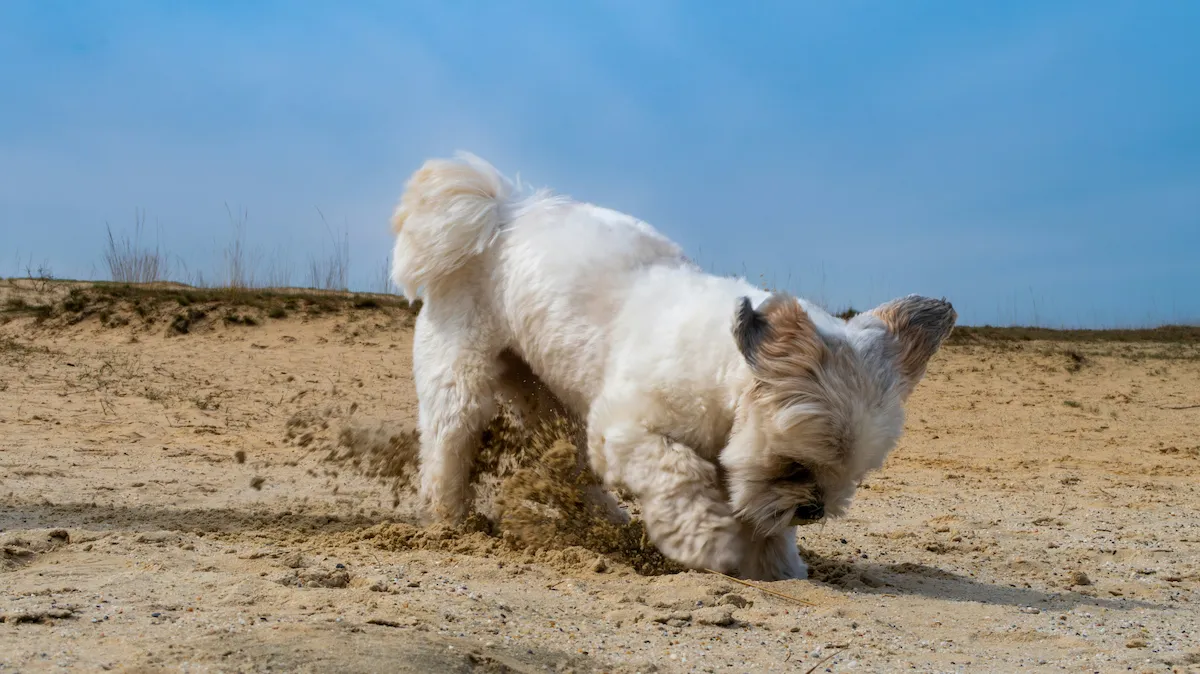
Digging is an instinctual behaviour in dogs that traces back to their wolf ancestors, where wild canids dug for survival for food storage, denning, temperature regulation and shelter. Today’s domestic dogs have this same wiring even though the survival need has gone, they are not being naughty when they dig up a mess in a neatly manicured lawn, but responding to a natural and deep-seated survival instinct.
And digging is not just reserved for the outdoors either, in fact it is more regularly performed inside as our dogs scratch at the carpet, their beds and try to burrow into the corner of the sofa to hide (or retrieve) a treat or make a bed for the night. Some of us don’t mind the fraying corners of the carpet, the earth spray across the garden or the misshapen sofa cushions but for many it is a frustration and can be misconstrued as bad behaviour.
But, expecting your dog to simply stop digging is unrealistic and actually restrictive to their natures. The right answer to protect what is precious to us as owners but giving the best to our dogs is management of the instinct rather than trying to stop it altogether.
There are several different reasons why a dog will dig and where they decide to do it.
Prey drive leads a dog, through their incredible sense of smell, to dig after something they detect under the ground or along fence lines, under sheds or tree roots. Hunting after mice, moles and other small animals. When you spot a dog frantically digging under the shed, it is almost a certainty that they are after some sort of prey.
Dogs don’t sweat like humans, only doing so through their paws which makes it harder to regulate their temperature. In hot weather they pant and their blood vessels expand to push warm blood to the surface to cool before returning to the heart. When the weather is too hot (or too cold as they do the same thing to warm up), digging a basin or small burrow in the earth allows the body surface to cool more quickly.
Dogs love to bury things, toys, chews, bones. On the face of it to us humans this seems illogical. Why bury your toy, just play with it! But it goes back to a wolf’s instinct to stockpile food for leaner times, where they are maybe full now, they know there will be times when food is scarce and they prepare for this. Locating the hoarding spot, however, is another story!
When a dog is lacking what it needs in mental and physical stimulation, digging can provide entertainment and stress relief, particularly in intelligent high-energy breeds. It may be difficult to assess this, especially if you are trying your best to exercise and entertain your dog with love and care; digging by a bored dog is often generalised and unfocused rather than targeted. It doesn’t by any means suggest you aren’t doing enough as a caring owner, just perhaps that your particular dog may need something a bit different to satisfy them.
Escape! The final major reason that dogs love to dig. Digging under fences is almost always about getting to something on the other side. Another dog, an interesting smell, or simply greater excitement than the current garden offers.
As with most dog behaviours, there are certain breeds with a more instinctual leaning towards digging.
Dachshunds and terriers are the most prolific diggers, driven by a high prey drive that was deliberately bred into them. Dachshunds — the "badger dog" — were developed in Germany specifically to hunt badgers, using their low-slung bodies and strong, paddle-like paws to dig into dens and flush the larger animal out.
My father would regularly "lose" our family Dachshund, Rusty, in the fields when he slipped off down a rabbit hole, spending hours underground while father stood listening to his excited barking from below. He'd wait patiently by the entry hole as dark fell, sometimes for hours, for Rusty to reappear.
Expecting a Jack Russell not to dig is rather like expecting a Border Collie not to herd — these dogs weren't just bred to enjoy digging, they were bred to need it.
Huskies, Malamutes and other Arctic breeds dig for a different reason entirely: temperature regulation, creating cool resting spots in summer and warmer ones in winter.
That said, breed accounts for less than ten percent of an individual dog's overall behaviour. Personality, environment, anxiety levels and earlier life experiences all play a significant role — any dog can become a digger given the right (or wrong) circumstances.
So what can you actually do about it? Start by addressing the cause rather than the symptom. Boredom digging calls for more exercise and mental stimulation; prey drive digging needs deterrents around the specific hotspot; escape digging means better fencing; temperature digging needs shade and somewhere cool to retreat to.
One of the most effective things you can do is give your dog permission to dig. A designated digging zone somewhere in the garden, made irresistible with buried toys or treats. Praise the digging there, and redirect calmly everywhere else.
Another way to do this is with a dedicated digging toy. There aren’t many options on the market but the DigDrum, a British -designed digging alternative, provides a brilliant redirection solution which can be used both indoors and outside that allows your dog a rewarding outlet for its digging instinct. It is a product we'll be reviewing properly very soon.
And whatever you do, never punish digging after the fact, your dog can't connect a telling-off to something that happened ten minutes ago, creating anxiety, which tends to make digging worse, not better.
Your dog isn't ruining the garden out of spite. They're doing something that their ancestors did for thousands of years before the garden existed. Understanding that doesn't mean accepting a moonscape lawn — but it does mean approaching the problem with the right frame of mind. Work with the instinct rather than against it, redirect rather than punish, and if you've got a terrier — perhaps consider raised beds.