Dog Harnesses: A Daily Doogle Guide
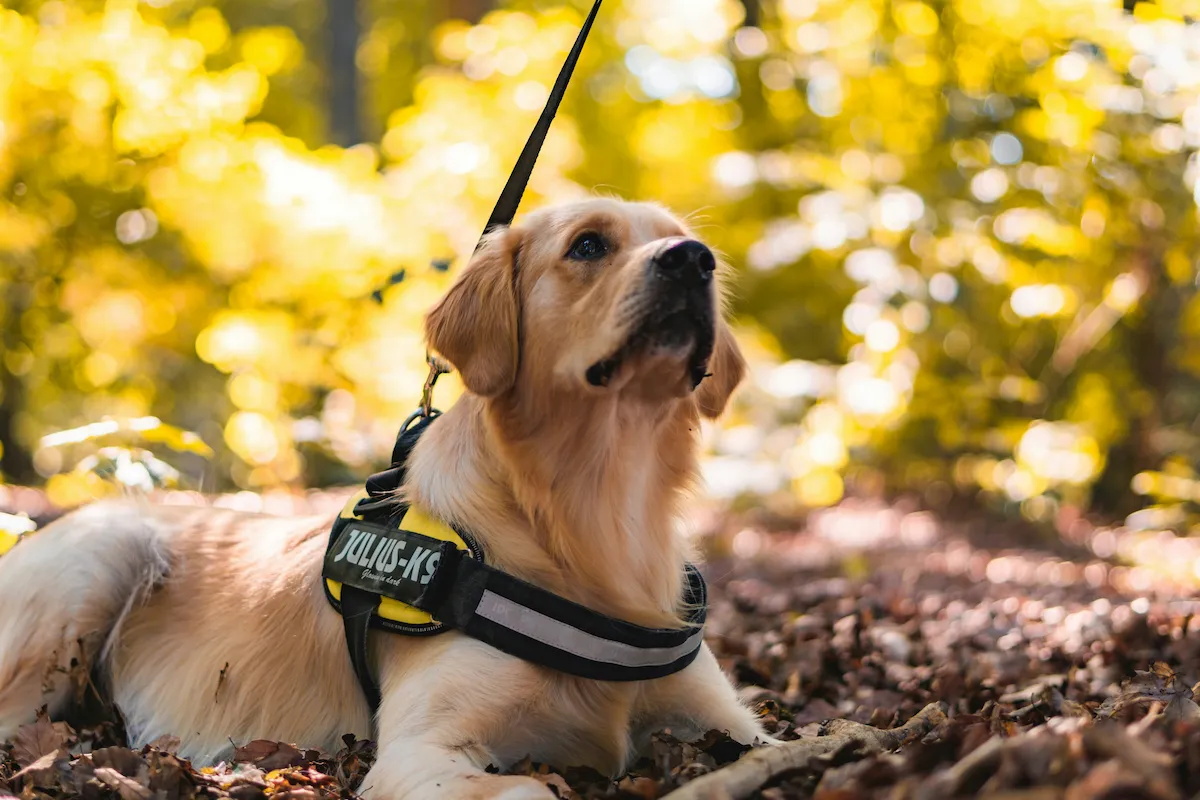
A harness works differently to a collar in one fundamental way — it distributes pressure across the chest and shoulders rather than concentrating it on the neck. For dogs that pull, that matters. For flat-faced breeds whose airways are already compromised, it can genuinely make a difference to their comfort and breathing on a walk. And for dogs that are Houdini-level escape artists from collars, a well-fitted harness often solves the problem entirely.
But not all harnesses are the same, and choosing the wrong one creates its own problems. A harness that sits too far forward restricts shoulder movement and affects gait. One with insufficient adjustment points won't fit properly — and a badly fitted harness is both uncomfortable and escapable. Take measurements before you buy. Most brands provide size guides and they're worth using.
Back clip vs front clip — what's the difference?
The clip position determines how the harness behaves on a walk.
A back clip harness attaches the lead above the dog's shoulders. It's the most common type — comfortable, natural feeling for the dog, and good for dogs that already walk reasonably well on a lead. The limitation is that for a strong puller, a back clip offers relatively little control. The dog's power is essentially unimpeded, which is why it's sometimes called the sled dog effect.
A front clip harness attaches the lead at the dog's chest. When the dog pulls forward, the lead redirects them sideways or back toward you, disrupting momentum and making pulling less rewarding. Used consistently alongside proper training, this makes a genuine difference. Used alone without training, less so — the harness assists the process, it doesn't replace it.
Many of the harnesses worth buying offer both attachment points, giving you the front clip for active training and the back clip for when things are going well.
A note on no-pull harnesses
No-pull harnesses are a specific and somewhat contested category. Some designs work through the front-clip redirection principle described above. Others apply pressure under the dog's armpits when they pull — which works, but works because it's uncomfortable. Woodgreen, the animal welfare charity, advises owners to be careful with this type and to ensure the fit is appropriate, noting that a belly strap sitting beyond the rib cage can cause discomfort on the dog's soft abdomen.
Worth knowing before you buy one.
What to look for
Beyond clip position, a few things separate a good harness from a frustrating one:
Multiple adjustment points — chest, belly, and ideally the back — mean you can actually fit it to your dog's shape rather than hoping for the best. A rear handle is genuinely useful for keeping control in busy situations, helping a dog over an obstacle, or steadying them at a kerb. Padding across the chest and sternum matters for dogs wearing a harness daily. And reflective trim, while not essential, earns its place on darker winter mornings.
If your dog has an unusual build — deep-chested, narrow-shouldered, a sighthound shape, or a flat face — pay more attention to fit than brand reputation. The best-reviewed harness in the world is useless if it doesn't fit your dog.
Budget-wise, expect to pay £20-40 for a solid everyday harness and £40-70 for premium construction that will last years of daily use. Below £20 you're likely buying a replacement within twelve months.
We're working on a full hands-on review specific brands — watch this space.
The brands worth knowing
Ruffwear Front Range The harness most consistently recommended by behaviourists, active owners, and independent reviewers. Four adjustment points, dual front and back clips, aluminium hardware, and padding across both chest and back. Particularly well suited to flat-faced breeds thanks to its wide chest panel and open-side design. Lightweight enough for all-day wear, durable enough for serious use, and backed by a comprehensive warranty. Premium-priced but widely regarded as worth it. We're working on a full hands-on review of the Front Range — watch this space.
Julius-K9 IDC Powerharness A back-clip harness with a working dog pedigree — used by military, police and security handlers globally, and the harness many serious dog owners end up on after working through the alternatives. Robust saddle construction, load distributed across the chest rather than the neck, heavy-duty buckles, and the signature customisable velcro label panel. Not specifically designed as a no-pull harness but offers excellent control for strong, broad-chested dogs. Available in an unusually wide size range from very small breeds to very large ones.
Perfect Fit A British brand solving a problem most harness manufacturers ignore — dogs whose proportions defeat standard sizing. The Perfect Fit is a three-part modular system: you select girth, chest and neck sections independently and build a harness around your dog's actual shape. For sighthounds, deep-chested breeds, or any dog that falls between sizes, this is often the answer. Made to order, takes more thought to buy, but delivers fit that off-the-shelf harnesses can't match. No head-loop design also makes it well suited to nervous or anxious dogs.
BullyBillows A British brand that has built a strong reputation among owners of powerful breeds. Developed in collaboration with Nottingham Trent University, built from ripstop material with triple stitching, neoprene lining, dual attachment points, and a padded rear grab handle. Consistently appears as a top recommendation for strong pullers across UK review sites. Straightforward to get on and off, holds up well to hard daily use.
Halti No-Pull Harness One of the few harnesses that mechanically does something different — a lifting action is triggered when the dog pulls, gently interrupting the impulse. Designed specifically as a training tool rather than an everyday harness, and most effective for moderate pullers rather than the strongest. Requires the dog to also wear a collar as the components connect together. Three sizes only, so check the fit carefully. The budget-friendly entry point into structured lead training.
Rabbitgoo The one that consistently surprises people. At a fraction of the price of the premium options, the Rabbitgoo holds its own in best-of comparisons against harnesses costing three times as much. Dual attachment points, air-padded chest panels, reflective stitching, rear handle. It won't last as long under serious daily use as the premium builds, but for a functional, comfortable everyday harness without the outlay it delivers considerably more than its price suggests.
How to fit a harness
Worth taking seriously — a badly fitted harness is uncomfortable for the dog and potentially escapable. A few basics:
Loosen all straps before putting it on for the first time. Once it's on, you should be able to fit two fingers under each strap — tight enough to stay secure, loose enough not to rub. Watch for the chest section sitting too far forward toward the shoulder joint, which restricts movement. And if you're buying online, try it indoors first before a proper walk — most retailers will accept a return if it doesn't fit, fewer will if it's been used outside.
If in doubt, take your dog to a pet shop that allows dogs in-store and get it fitted properly before committing.
Coming soon
We're working on full hands-on reviews of specific harnesses tested properly over real walks. If you've got strong views on a harness that isn't here, drop us a line via the contact page.